
Hello everyone and welcome back to PMP in the Lab’s Collateral Science blog! Now that I’m not sick, the power is on, and there’s no active emergency, I’ve finally had the time and energy to sit down and write again. 2021 has certainly had a rough start, but at least we have a vaccine for COVID-19 that will only become more available with time. While there has been a lot of noise about vaccinations, pro, anti, or cautious, I think it’s important to talk honestly about what it’s like to have the vaccine. At this time, a majority of my coworkers as well as myself and my husband have all received both shots of the mRNA based COVID-19 vaccines and there was a wide variety in how people felt after they were vaccinated. But for those who have reactions to the COVID-19 vaccine, it can be difficult to balance how they feel with the tiny shot that was received.
Managing Vaccination Expectations
One of the first and healthiest things to do is to manage expectations when you receive the vaccine. First of all, this shot is tiny to the point where I’ve had TB tests that felt more painful. The needle is so fine and the injection is a very low volume so that the shot itself hardly causes any immediate pain. Initial reactions to the vaccine can start a within a few minutes for those with allergic reactions or a few hours later, 4-12 hours later was common for the people that I’ve talked to. Some people woke up with sweats and fever onset in the middle of the night while others went home early as they started to get chills. A majority of people I know wound up taking at least one day after the shot to recover. Based on these experiences, I highly recommend planning the vaccine at a point where you can take a few days to relax and recover either with a few days off or by taking PTO/Sick leave. Another thing that’s believed to help is taking an non-steroidal anti-inflammatory (NSAID, such as Tylenol, Motrin, Aleve, etc) an hour or two before or immediately receiving the vaccine but there’s been no formal study that shows just how well they help.
Talking with the people I know who have received both doses of the mRNA vaccines, we can all agree that the second shot has more side effects than the first shot and that the arm pain is less than the tuberculosis shot while being close to or a little worse than the flu shot we receive annually. From the FDA data [link, link] we know that most people will have some kind of reaction to the vaccine, typically pain at the injection site. Other common reactions include fatigue, headache, and body pain (both muscle and joint). The table is a compilation of the FDA data released with the Emergency Use Authorizations.
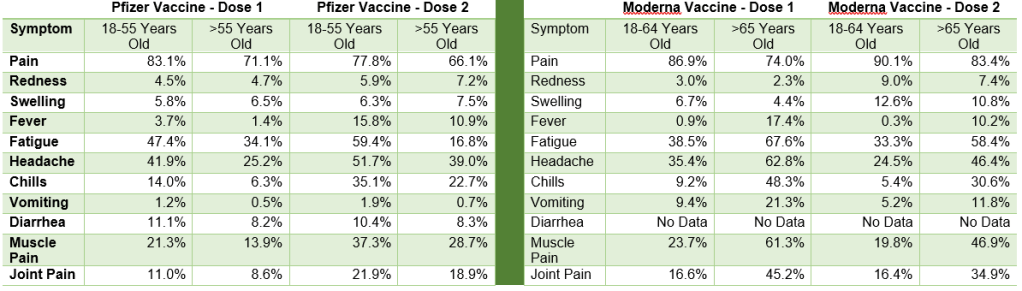
It seems hard to believe that such a tiny shot can generate so many consequences, but it does. What’s amazing about the mRNA vaccines is that two small doses are super effective (>90% protective) against COVID-19 by encoding the information of a single protein. All of the reactions listed come from your immune system getting trained on the new protein from the mRNA makes, even though you may feel like you may have caught COVID-19.
Again, the mRNA based vaccines DO NOT have full COVID-19 in them. Instead they contain enough of a snapshot that your body can train itself to recognize the virus if it ever does show up!
What happens when you receive a COVID-19 mRNA vaccine?
So now that you’ve had your shot, you continue about your day. At the injection site, a lot is happening. The messenger RNA in little fat spheres known as nanoparticles are merging with the cells near the injection site; specifically dendritic cells which are part of the immune system and are in place all over your body to help monitor for invading pathogens. This process begins to happen relatively quickly, within minutes of receiving the shot. From there, the nanoparticles get processed by the cells and begin to release their mRNA payload into the cell where the machinery begins to assemble to start translating the mRNA into the amino acids that form the encoded spike protein. Meanwhile, about the time your body is starting to express the protein from the vaccine’s mRNA you arm may start hurting. Pain at the injection site is often due to cells reacting to the fact that there was a sudden addition of a bunch of fluid to the local area, this hurts in the same way that a bruise does because the extra volume can cause discomfort and pain.
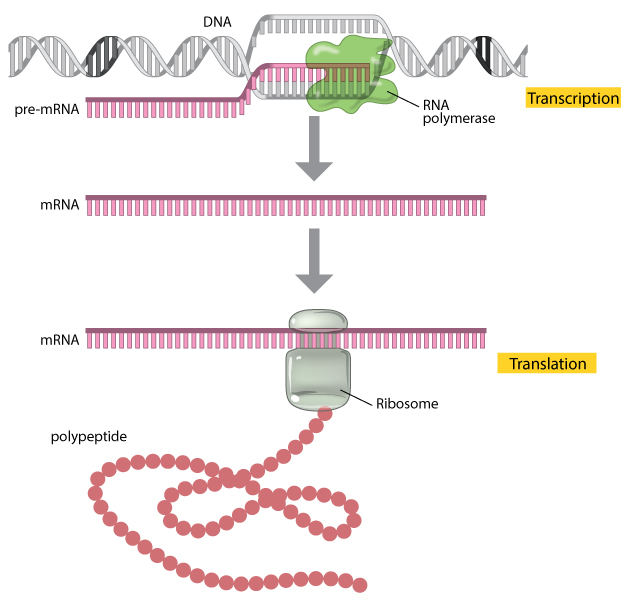
From there, the cells will process the amino acids into the correct protein structure. Both the vaccine and the virus take advantage of your cells’ signals to make stuff, it’s what they’re there to do after all. Once the protein is created, it is brought to the surface of the dendritic cell which races off to the lymph node to show other cells what it has found. [link] Think of this as a guy racing to the bar to meet with his buddies to show off this weird thing he found.
The lymph node is a haven for all kinds of immune cells that get down to work of identifying and coming up with plans to fight this new thing the dendritic cell is bringing to their attention. While the protein itself hasn’t changed how your body is acting, it’s at this point where your immune system takes notice and ramps up that you may start to feel unwell. Feeling tired is a sign that your immune system is activating, as it takes a lot of energy to train your adaptive immune system, while the fever is there to turn your body into an inhospitable environment for any invading pathogens.
During the training of your immune system your body gets thrown out of it’s homeostasis, a fancy word for normal function, to prioritize supporting the immune system. This can mean changes in blood pressure and where your blood is flowing. Headaches and some instances of vomiting are triggered by changes in blood pressure, while diarrhea and chills can be caused by blood focusing on essential organ circulation like to your heart, lungs, and liver instead of places like your skin and intestines. These changes in blood flow can also cause inflammation at various sites in around the body including muscles and joints.
All told, enough of these symptoms can make you feel as though you’re sick even though you haven’t been infected with anything. When you don’t feel well after getting vaccinated, the activation of your innate immune system drives your response because it is reacting like you’re sick when in fact you’re giving it a primer on how to recognize pathogens in the future.
Hope that helps and we all get vaccinated soon,
-Your friendly neighborhood scientist
 PMP in the Lab