In a clip steadily gaining views today, Dr. Fauci rebutted claims from Senator Rand Paul that a paper from the Wuhan Institute of Virology constitutes “gain of function” research being done in China that was illegally supported by NIH funding. Even as someone in the know what all parts of that sentence mean, it can be difficult to describe exactly what’s going on so I wanted to break down the paper and the discussion that happened in front of congress today.
For the video in question you can visit https://www.c-span.org/video/?513400-1/dr-anthony-fauci-testify-covid-response and select the “Sen. Paul Questions Dr. Fauci on Wuhan Lab Funding” point of interest to view the exchange in full. The paper in question is from the November 2017 PLOS Pathogens by Hu et. al [link].
The Claim:
On July 20th the American Senate Health, Education, Labor and Pensions Committee convened a session to hear about the American Federal response to the COVID-19 pandemic. Members of the American scientific, health, and government communities gathered to update the senators on the current information we have about the pandemic and answer senators’ questions. Senator Paul (R – Kentucky) began his 5 minute questions session by directly questioning Dr. Fauci (Director of the National Institute of Allergy and Infectious Diseases (NIAID), part of the National Institutes of Health (NIH) [link]) about a statement Dr. Fauci made in a previous hearing where Dr. Fauci said that the NIH does not fund “gain of function research” at the Wuhan Institute of Virology. Sen. Paul also gave a vague characterization of the research as “Viruses that in nature only infect animals were manipulated in the Wuhan lab.” This of course makes for a delightfully frightening soundbite but is not the most detailed review of a paper that I’ve seen. Dr. Fauci responds by stating he will “…not retract his statement…” and that “This paper was judged by qualified staff up and down the chain as not being gain of function.”
The discussion escalated from there to the now popular clips of Dr. Fauci telling Sen. Paul “You do not know what you’re talking about.” As much as I don’t enjoy watching grown men yell at each other, I watched the exchange again to try to figure out what exactly was being discussed on a scientific basis and wanted to bring what I’ve learned from reading the paper and grant to this blog to help clarify just what these gentlemen are talking about.
The Grant:
From the paper published in PLOS Pathogens, you can find the NIH funding listed (Award Number: R01AI110964) and a quick search later brings you to the Health and Human Services (HHS) website’s TAGGS system that shows detailed information publicly available about the grant in question [link]. The abstract of the grant describes that the grant is requesting additional funding to continue research into the risk of SARSr-CoVs (SARS related CoronaViruses) spilling from Chinese bat populations into people. Funding was granted in 2014 and supported work until July 2020 with a total of $3,748,715 in work supported and EcoHealth Alliance Inc [link] named as the primary recipient. EcoHealth Alliance is a non-governmental, nonprofit organization based in New York that focuses on protecting wildlife and public health from the emergence of disease. Dr. Fauci states that the Wuhan Institute of Virology received the NIH funding as a sub-award, a standard arrangement in scientific grants where the grant recipient gets the full funding initially and passes a portion of the funding on to a sub-awardee. Since the full grant is not publicly available I can’t verify this claim but as the funding organization is listed as the NIAID we can safely assume that someone who works for Dr. Fauci vetted this claim before Dr. Fauci went in front of the senate committee.
The grant in question has three aims which I will summarize; Aim 1) Characterize SARSr-CoVs currently circulating in bats in southern China while identifying viruses with highest potential for spillover to humans, Aim 2) Monitor high-risk populations with known bat contact to see if any spillover is occurring and analyze any disease, Aim 3) Test infectious capacity of different spike proteins in cell culture and animals to predict spillover potential. All three of these aims work together to set up monitoring for a coronavirus spillover that became very real in the fall of 2019 and quickly became a pandemic in 2020. Nowhere in the grant is “gain of function” purposefully stated as a research goal, but it doesn’t have to be outright stated in the abstract to be included as part of the research.
There was a ban on gain of function research that started in 2014, as discussed by Dr. Fauci and Sen. Paul, so I went and found the statement as the grant in question started that same year. In October of 2014, an announcement was made that begins with the following:
The White House Office of Science and Technology Policy announced(link is external) today that the U.S. government will undertake a deliberative process to assess the risks and benefits of certain gain-of-function (GOF) experiments with influenza, SARS, and MERS viruses in order to develop a new Federal policy regarding the funding of this research. During this deliberative process, U.S. government agencies will institute a pause on the funding of any new studies involving these experiments. For purposes of the deliberative process and this funding pause, “GOF studies” refers to scientific research that increases the ability of any of these infectious agents to cause disease by enhancing its pathogenicity or by increasing its transmissibility among mammals by respiratory droplets.
Statement on Funding Pause on Certain Types of Gain-of-Function Research from Dr. Francis S. Collins, Director, NIH [link]
So very specifically the US government wanted to fund no further research that increased how sick or how infectious the flu, SARS, and MERS could be. Now, the grant in question began funding research in May of 2014 and this announcement in changing funding policy went into effect in October of 2014 by the time the grant was not just funded but up and running. While the announcement is specific about new funding, it does request projects with this type of work be voluntarily paused. Additionally, R01 grants have an annual reporting cycle so that if the NIAID found that any of the work being done could be considered “gain of function” they could have ceased funding during review. By reading the abstract as well as the guidance available at the time, it does not appear that purposeful work was being done by the Wuhan Institute of Virology to study “gain of function” in bat corona viruses, so let’s look at what they published.
The Paper:
Severe Acute Respirator Syndrome (SARS) burst onto the infectious disease scene as a viral disease with high fatality and high transmissibility. Originally thought to originate in masked palm civets, it was found that the civets were likely only an intermediate host and that horseshoe bats hosted a large reservoir of different coronaviruses that likely passed SARS-CoV to the civets which then passed the virus on to people. Because of the large number of horseshoe bat species and vast number of circulating coronaviruses among bat populations, researchers at the Wuhan Institute for Virology wanted to track how SARSr-CoVs were evolving and mutating in bats from a single cave in a southwestern Chinese province with sampling performed over 5 years.
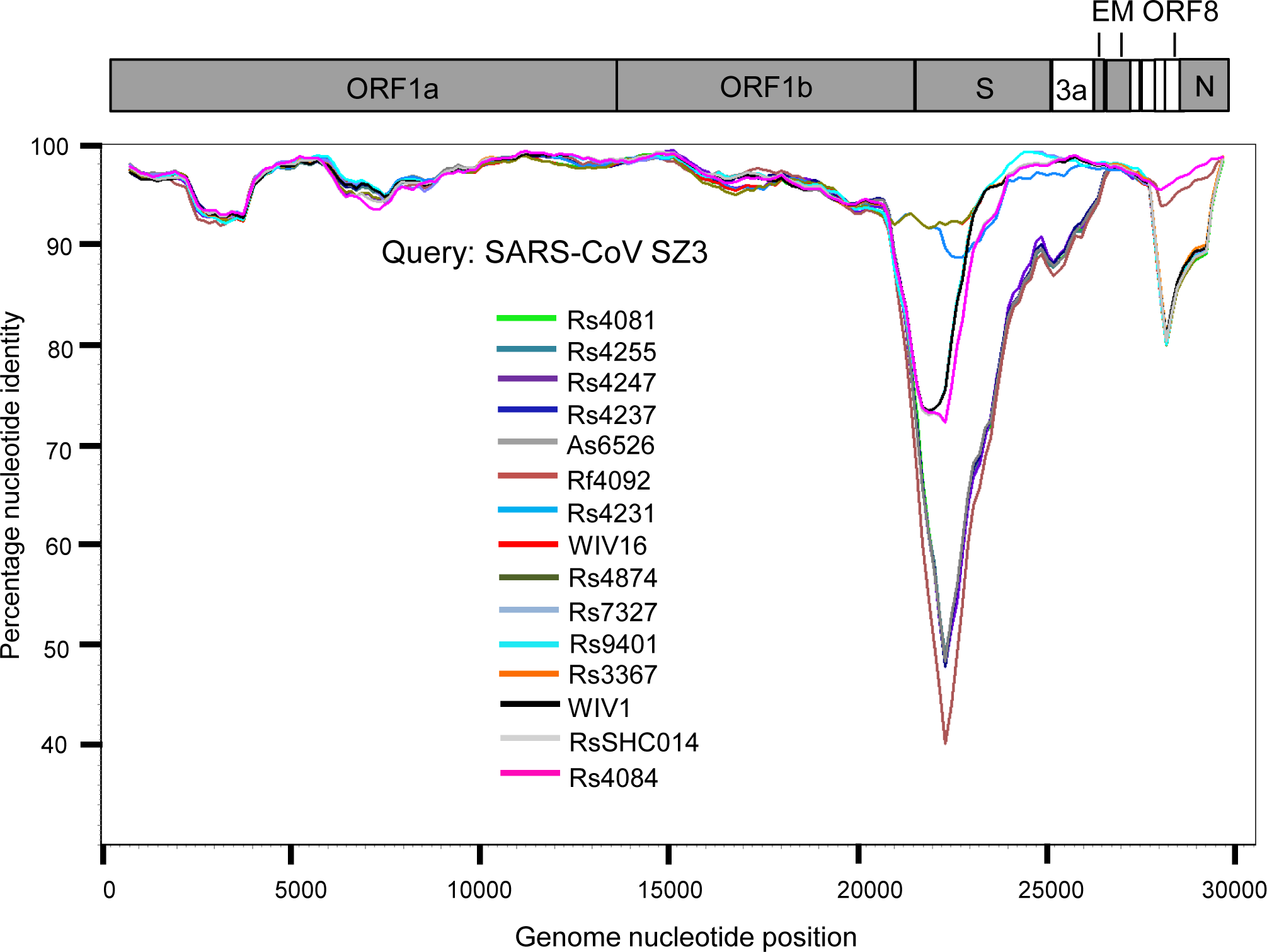
This paper goes into a lot of evolutionary genetics, known as phylogenetics and near and dear to my heart as I spent my undergrand and masters performing phylogenetics research. As I’m a pretty deep phylogenetics nerd, I’ll spare you the details and summarize that the researchers in Wuhan were able to identify 15 different SARSr-CoVs in a single cave and the viruses that showed the greatest number of mutations occurring in the S or spike protein that is critical for the virus to be able to infect cells.
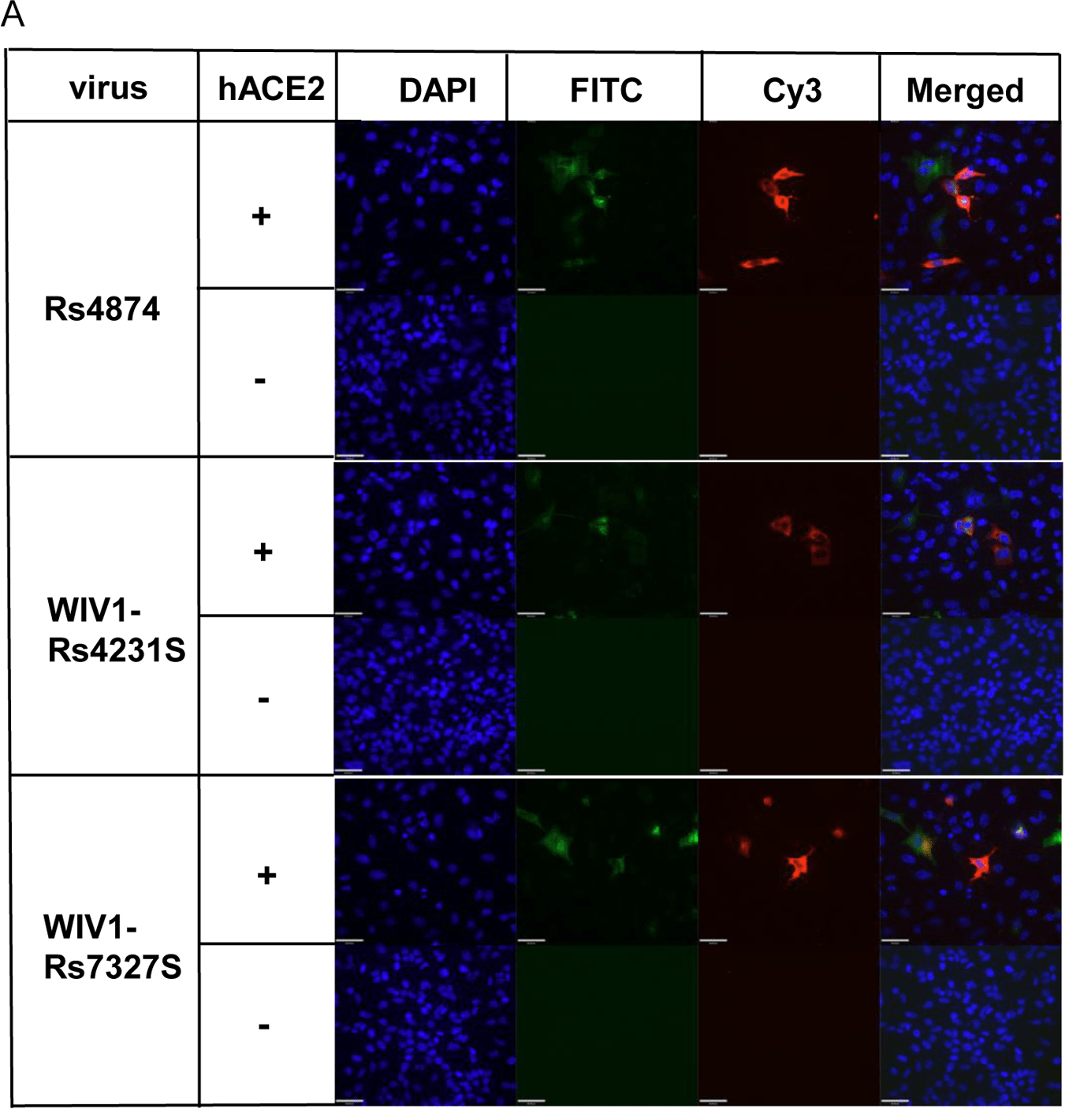
Now we get to the sticky part of the paper where the researchers test virus infectivity in cell culture. The researchers took the sequence of 8 different spike proteins and placed the sequences inside an infectious bacterial artificial chromosome (BAC). When the infectious BACs carrying the different spike proteins were placed with monkey kidney lining cells, 2 out of the 8 were able to infect the cells and spread. Testing of the spike carrying infectious BACs then proceeded to human HeLa cells, cervical cancer cells taken from Henrietta Lacks in 1951, where testing was done with controlled ACE2 expression. Since previous research showed that SARS-CoV used the ACE2 receptor to enter cells, the researchers wanted to test infection in both the presence and the absence of the human ACE2 receptor and found that the spike carrying infectious BACs were only able to infect cells when the ACE2 receptor was present in the cells.
The Verdict: Was this Gain of Function Research?
Sen. Paul claimed that the research performed in Wuhan on SARSr-CoVs constituted gain of function research in violation of United States NIH policy based on a description of creating novel, artificial viruses that were originally only able to infect animals and unable to infect human cells.
Dr. Fauci claims that the research performed in Wuhan did not constitute gain of function research as evaluated by “staff up and down the chain” which I can clarify to mean several panels of scientists who are leading experts in their fields evaluating the research proposals and results annually over several years. One thing I’d like to clarify is that for this kind of funding, not only do you have to pass practical evaluations about how critical the research you’re proposing is but you also have to pass ethical evaluations to ensure that proper respect is being granted for living things and that you’re not putting the world at risk of accidentally creating a super-bug as you tinker in the laboratory. As the research was reviewed in 2015 after the new gain of function policy went into affect, the grant reviewers absolutely screened the grant proposal and data to ensure that gain of function was part of the evaluation.
Looking at what the researchers did, they cloned just spike protein sequence into an infectious bacterial artificial chromosome which could be argued as creating a novel, artificial virus. However, it is clear that the researchers were just testing what function was present for the spike proteins. Based on the methodology, no new spike proteins were created and just naturally occurring sequences were tested. Additionally Sen. Paul’s characterization of placing the spike proteins in a “SARS related backbone” is simply incorrect as the backbone came from bacteria rather than any kind of virus, backbone here is being used to describe the everything else that makes up the bacterial artificial chromosome. Further when he says that the artificial coronaviruses, which again is not an accurate way to describe the spike carrying BACs, were unable to originally infect humans is not proven in any way by this paper as the paper focuses on the ability of the spike protein to bind to a human ACE2 and the original virus was never tested directly against human or animal cells. No function was ever gained only tested.
In summary, the definition at the time and the results shown in the paper show that Dr. Fauci is correct and Sen. Paul is at best misinterpreting the data.
The really disappointing thing is that based on the further exchange between Dr. Fauci and Sen. Paul, it becomes apparent that the senator is misrepresenting science in order to push a political agenda that somehow Dr. Fauci is trying to cover up a SARS-CoV-2 conspiracy. Data shows us that COVID-19, caused by SARS-CoV-2, appears to have evolved naturally in bats before jumping to people in late 2019, causing a first outbreak in Wuhan and then spreading to the rest of the world. While there are still questions to be answered about how the virus got to Wuhan in the first place, how much the Chinese government knew about the disease before informing the rest of the world, and finding the original disease vector there is no doubt that SARS-CoV-2 was from a naturally occurring source and it’s a real shame that Sen. Paul is ignoring the evidence of that evolution which is literally at his finger tips.
Hopefully we can move on from conspiracy theories soon, Delta is out there and needs to be taken seriously or else we risk losing the progress we’ve made against the pandemic to date.
-Your friendly neighborhood scientist
 PMP in the Lab
Thank you for the perspective, and reducing the complexity of the language so those of us who are not microbiologists can understand it.
Your comments did inspire me to read the actual research in question. This statement in the paper appears to be referring to artificial viruses used in the study, “The chimeric viruses were rescued as described previously”, and the opening sentence of that paragraph “Recombinant viruses with the S gene of the novel bat SARSr-CoVs and the backbone of the infectious clone of SARSr-CoV WIV1 were constructed using the reverse genetic system described previously”. Is the argument then that modified genomes in BAC’s were used to test the infectivity, but there were no novel or chimeric viruses constructed? Or is it that the variations of the spike proteins used all existed in nature prior, so they would not meet the definition of gaining function?
And while it’s readily apparent that Rand Paul is no microbiologist, how should we contend with Dr. Richard Ebright’s, perhaps the leading US microbiologist, assertion that this research “matches, indeed epitomizes the definition of gain of function research?”
It sounds like the debate is really about semantics involving what some people consider GOF research, and not necessarily a comprehensive objective definition. Is that accurate?
Thanks!
LikeLike
The BAC’s can be argued as a chimeric virus, but as they were used to test natural SARSr-CoV function the research overall isn’t considered gain of function. If the most infectious spike was taken and put back into a different SARSr-CoV strain then you would have true gain of function research.
As for Dr. Ebright, at this point I’m less concerned with a single person’s opinion rather than the scientific consensus. The trickiest thing about science is that the field is constantly changing and updating and it takes a lot of effort to stay up to date in the field even when there’s not a brand new pandemic. If a leading microbiologist association were to come out and say the same, I hope they would be more specific as to why they thought. As that has yet to happen, we’ll take his word as one professional opinion among many different ones.
Gain of Function is one of those tricky concepts to nail down, as happens a lot in biology. I’ll leave that for the teams of experts at places like the NIH to determine and if Faucci says that the people he works with didn’t find the research in this article matching the Gain of Function definition then after reviewing the material myself I won’t disagree.
LikeLike